
Monroe County Ownership Timeline
The legal spine of any ownership timeline sits with the Monroe County Clerk, whose office records deeds, plats, wills, liens, and mortgages. Recorded transfers give the chain its backbone. Tax rolls, probate files, maps, and local histories can explain a gap. They should never quietly stand in for a deed.
| Transfer Date | Grantor to Grantee | Deed Type | Book/Page |
|---|---|---|---|
| Newest deed | Current transfer parties | As indexed | Exact locator |
| Prior deed | Earlier owner to later owner | As recorded | Prior reference |
| Earlier book entry | Repeat for the same land | Deed or fiduciary transfer | Book and page |
Keep each row faithful to the source. Record names and land locators exactly as written. Compare acreage, tract calls, and plat references before assuming two records describe the same tract. A transfer between familiar names may look promising. But if it involves different land, it is not part of the chain. For personal searching, the Monroe residential eCCLIX signup route is the official entry point.
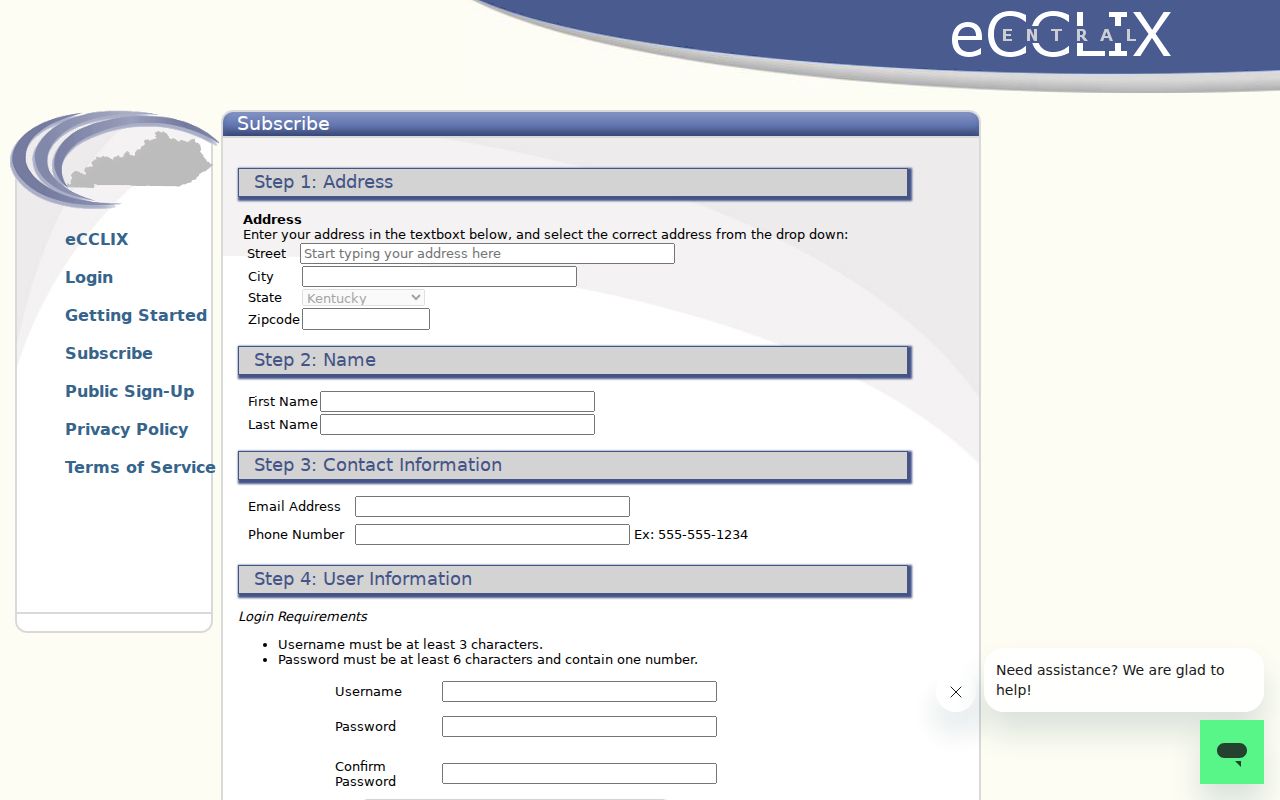
The eCCLIX access page shows the account and search limits that come with personal use. Gather names and deed references before spending the day's search allowance.
Reconstruct Monroe County Deeds Backward
eCCLIX indexes recorded instruments by party and record reference. Monroe residents get up to five no-charge personal searches per day. Prepare the first grantee name, spelling variants, a parcel clue, and likely dates before searching.
- Find the latest deed and match its legal description to the subject tract.
- Copy the grantor and any prior-deed or source-of-title citation.
- Search that grantor as an earlier grantee, then match the land again.
- Repeat until the online trail ends, then request the cited book or microfilm.
- Grantor
- The party transferring the stated interest.
- Grantee
- The party receiving it.
- Chain of title
- The ordered transfers affecting the same land.
- Reverse index
- An index used to find a deed through the receiving party.
Deeds That Change Monroe Chains
Not every transfer in a prior-owner chain is a plain sale. Correction and quitclaim deeds can amend an earlier link. Executor, administrator, commissioner, and fiduciary deeds flow from estates or court orders. Partition instruments split interests. An affidavit of descent can point toward heirs. A plat or boundary instrument may even change the tract being followed.
Read the instrument type and its authority before naming any former owner. When a court matter surfaces, CourtNet or KDLA Judicial Indexes can supply a case lead. The Monroe Circuit Court Clerk holds the file. Then tie the court result back to the deed recorded with the County Clerk.
Prior Owners on Monroe Tax Bills
A name on an old tax bill is not automatically a prior deed-chain link. Kentucky fixes tax ownership on January 1. A buyer later in the year may hold the newest deed. The seller's name stays on the bill until the next calendar year. Place the tax year beside the tax name, and the recording date beside the deed.
This quirk explains timing, not title. When the names differ, test the January 1 rule. Compare parcel keys and legal descriptions. The PVA assessment field, the tax bill, and the newest grantee each answer a differently dated question.
Follow Monroe County Parcel Changes
Parcel IDs and acreage shift when land is divided, combined, corrected, partitioned, or platted. Keep every number rather than forcing old deeds into a current ID. Lot-and-block descriptions point to a plat. Metes and bounds rely on courses, distances, and monuments. Easements can affect land use without transferring ownership.
Copied qPublic material cites parcel examples 18-45, 18-46, and 18-45.01. They show why a single punctuation mark matters, though not a complete numbering rule. The county surveyor office is listed as vacant. Disputed lines call for the records plus a licensed private surveyor.
Older Monroe County Owner Books
Monroe County was formed in 1820. Its land trail reaches well beyond today's web systems. The earliest eCCLIX index and image year is not published. Ask the Clerk what is online, at the counter, transferred, or filmed. Do not read a blank result as historical proof.
The Kentucky Department for Libraries and Archives offers catalog help and microfilm. It also provides original retrieval and a research room. Its guides separate deed books, plats, mortgages, and liens. Easements, releases, wills, commissioner deeds, and mineral leases are separated too. William B. Harlan Memorial Library can add newspapers, directories, genealogy, and community history.
Note: No official source documents a Monroe courthouse fire or any known countywide record loss.
Bridge Monroe County Probate Transfers
Death can move land in several ways. These include a will, a probate order, an affidavit of descent, a fiduciary deed, or a later heir transfer. Search both the deceased owner and the estate representative across court and clerk records. Then connect each lead to a recorded land instrument. A death certificate may prove death, but it conveys nothing.
Obituaries, cemetery items, and family files can surface a name variant. Treat each as a clue only. The deed, will, court order, or affidavit supplies the legal bridge. The fiduciary role must stay clear throughout.
Depth of Monroe Ownership Records
Historical depth resists any single published online cutoff. Use eCCLIX for available indexes and images. Use the Clerk for counter books and copies. Use KDLA for archive and microfilm holdings, and the library for place and family context. A blank search proves only that one system returned no match.
Former-owner research supports house history, estate work, title review, and purchase diligence. Scans can be missing. Spelling variants, separate plat volumes, and changed descriptions can all break a quick chain too. Record each gap, then request the next primary source.
Lawful use. Trace Monroe County former owners for legitimate land and history work. Never use the trail to stalk, harass, or harm anyone.