
Obtain a Monroe County Deed Copy
Start at the Monroe County Clerk records page. Residential eCCLIX searching is free for personal, noncommercial use. It caps you at five searches per day. When no image is attached to an index entry, contact the clerk at 200 N. Main St., Suite D, Tompkinsville, or call (270) 487-5471. Written requests can be delivered, mailed, emailed, or faxed, but each one must identify the record precisely. Copy fees are paid in advance.
Recorded, not guaranteed. Monroe County deed records show public filings. They do not supply a title opinion or rule out unrecorded interests.
Save the Monroe eCCLIX Index Fields
A useful deed note holds more than a party name. Kentucky retention guidance recommends saving each party, the reverse party, recording date, instrument type, identification number, property description, book and page, page count, and the image link. Field choices and the earliest online year have to be confirmed live, since the logged-in Monroe search controls are not publicly viewable.
| Party fields | Grantor, grantee, reverse party, name variants |
|---|---|
| Record fields | Date, type, instrument ID, book/page |
| Land match | Property description, prior reference, exceptions |
| Image check | Page count, exhibits, signatures, certification |
The eCCLIX residential login shows the controlled entry point.
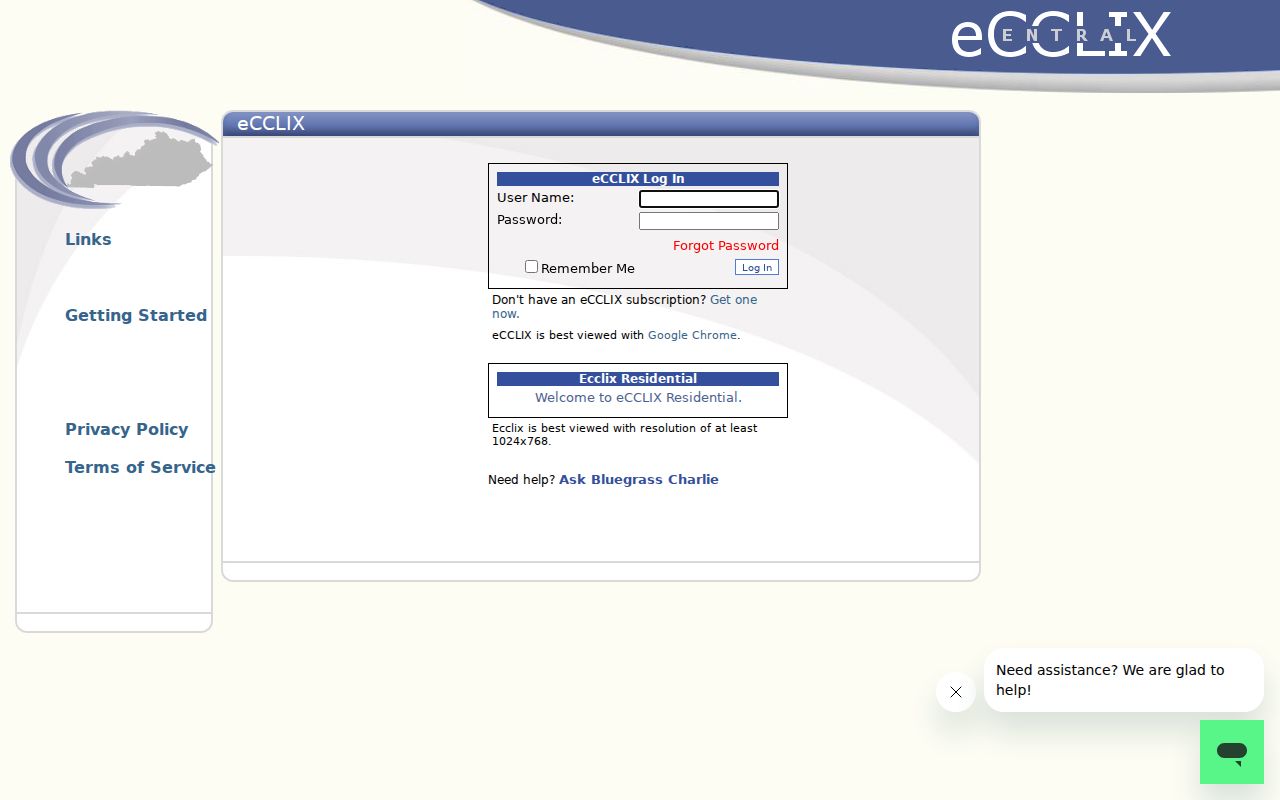
A working login still proves nothing about historical coverage, so a blank result calls for the clerk and archive fallback.
Older Monroe County Deeds Need Offline Research
No official Monroe source states the first year available online through eCCLIX. Ask about that first. Request the earliest online index and image volume, then the first counter-only book. The fallback chain starts with the clerk's physical records. It then runs to the Kentucky Department for Libraries and Archives county inventories, land-record guides, microfilm, catalog, and research room.
The William B. Harlan Memorial Library can supply names, newspapers, cemetery material, and regional-history leads. Use those leads to locate a recorded deed. Do not treat local history as proof of title.
Monroe Plats Tie Names Back to Land
Two people can share one name. A single tract can be split or combined over time. So compare acreage, lot and block, metes-and-bounds calls, prior deed references, exceptions, easements, and any cited plat. Only then conclude two entries describe the same land. qPublic offers a locator. The deed and the recorded plat carry the controlling documentary trail. Kentucky mapping guidance is blunt on this point. PVA maps serve identification, not conveyance. A boundary dispute calls for the deed text plus a licensed survey.
Court and Probate Records Explain Some Deeds
Some deeds point beyond themselves. An affidavit of descent, commissioner's deed, partition, quiet-title order, foreclosure transfer, or estate deed can send you to another file entirely. Search the Kentucky Judicial Indexes or CourtNet first. Then request the underlying Monroe case from the Circuit Court Clerk. Record the case number and its authority beside the later deed locator.
DOC ALERT Watches Monroe Filings by Name
The clerk promotes free notices whenever a deed or mortgage is filed under a watched personal or business name. DOC ALERT cannot stop or validate a filing, but it can prompt fast review. Enroll through the official Monroe DOC ALERT page. Contact the clerk about any unfamiliar instrument reference.
Monroe Copy Fees Differ from Recording Fees
The clerk's published schedule lists minimum recording fees. Those include $50 for a deed or easement and $46 for a correction deed. A plat costs $50, and a mortgage runs $80. Every figure describes accepting a new instrument for recording. None of them promises the cost of an online image, plain copy, certification, or archive retrieval. The published fees cover recording alone, not copies.
Before ordering, give the clerk the parties and the approximate recording date. Include the instrument type and the book and page or identification number. Add the page count if you know it. Ask whether an image sits online. Ask whether a plain or certified copy suits your purpose. Confirm the current copy and certification charges. That keeps a published recording fee from being mistaken for a copy quote.
Read Every Page of a Monroe Deed
The index gets you to the instrument. The deed image carries the substance. Transcribe grantor and grantee names exactly as written, along with the consideration language, full legal description, source-of-title reference, exceptions, preparation statement, return-mail address, signatures, notary block, and clerk certification. Exhibits sometimes hold the only complete tract description, so read them too.
Then compare the description against the prior deed. A repeated acreage figure alone is weak proof that two records cover the same land. Calls to adjoining properties, road references, lot and block, a survey citation, reserved mineral rights, or an easement can separate a true match from a nearby tract. Keep any uncertainty explicit when an exhibit is missing or illegible.
Monroe Encumbrances Need Their Own Follow-Up
A mortgage amount is the original secured amount. It is not the current balance or the property value. Chase the trail further: assignments, modifications, substitutions, full and partial releases. Also check any later instrument filed under lender or assignee names. A mechanic's lien search deserves the same depth. Pull the claimant, owner, contractor, release, bond to release, and any enforcement case.
If no release appears, write that plainly: not located in the searched index. Never state that a debt remains unpaid. The same discipline governs a lis pendens or tax lien. The recording should be paired with the court or tax file, and with any later release, deed, or redemption record.
A final Monroe deed abstract should state its search dates and scope. List each party exactly. Identify the tract by its recorded description. Preserve unresolved gaps rather than smoothing them over. That keeps the work reproducible and stops a short index label from becoming an unsupported claim about possession, debt, value, or boundary.
Trace a Monroe Chain Across Changed Parcel Descriptions
Parcel numbers are administrative labels, not identity. Monroe County splits, combines, and corrects land all the time. A new qPublic number can appear after any of those events. So a deed chain follows the land description rather than the current identifier. Start from the most recent deed and copy its prior-record reference and exceptions. Then compare those details against the earlier instrument. Preserve every version of the acreage, metes-and-bounds calls, lot and block, road or watercourse reference, adjoining owners, and cited survey or plat.
Instrument type matters. A correction deed may fix a name, a description, or an execution problem. It still points back to the original grant. An easement may touch only a strip or right of use. A partition or commissioner's deed can divide interests through a court process. An affidavit of descent can supply an heirship link. Flattening all of these into a generic sale label hides the very thing. That detail explains why the chain or parcel shape changed.
Some descriptions will not reconcile. When that happens, request the full exhibits and the referenced plat from the clerk. The PVA legal-description lead is worth comparing. Keep the office's disclaimer in mind, and never let a short assessment description override the deed. If a boundary question stays material, a licensed surveyor can interpret the controlling instruments on the ground.
Submit a Precise Monroe Deed Request
A written request to the clerk works best when it identifies a record. It should not ask for a conclusion instead. Give the grantor and grantee, the approximate recording date, and the instrument type. Include a book/page or instrument number. Add a parcel or legal-description clue and say whether a plain or certified copy is needed. Monroe County procedure also requires requester information and a residency statement. The clerk accepts hand delivery, mail, email, and fax, with copy fees paid in advance.
The Kentucky Open Records Act gives agencies five working days to respond. That clock applies to a proper written request. A delay is allowed, but the response should explain the cause and the earliest availability. Asking for a deed or an index entry differs sharply from asking staff to determine ownership. It also differs from asking them to clear title or interpret an easement. The office supplies records. The researcher, attorney, title professional, or surveyor performs the analysis the question actually requires.
Older books need sharper wording. Ask separately for the earliest online index year. Ask also for the earliest image year and the first counter-only volume. That phrasing keeps an index entry distinct from a scanned page. It also points pre-digitization work toward a physical book, microfilm, or a KDLA holding.