Monroe County qPublic Fields Have Different Weight
qPublic promises a lot. The PVA says it provides ownership information, legal descriptions, valuations, photographs, sketches, and property characteristics. Not every field carries equal weight. Ownership, legal description, and valuations are believed accurate, while sale price, sale date, and characteristics remain unverified and may contain errors, so record the assessment year whenever qPublic supplies your first lead.
| Search keys | Name, address, parcel number, alternate ID |
|---|---|
| Core result fields | Parcel, address, owner, city, area, state, ASV, reference number, STR |
| Possible detail | Legal description, sketch, photo, sale history, exemption, tax district |
| Check elsewhere | Recorded grantee, exact deed text, current tax payment, legal boundary |
The official Monroe PVA landing page posts its ownership and tax-roll caveats up front. A visitor reads those warnings before the search even begins.
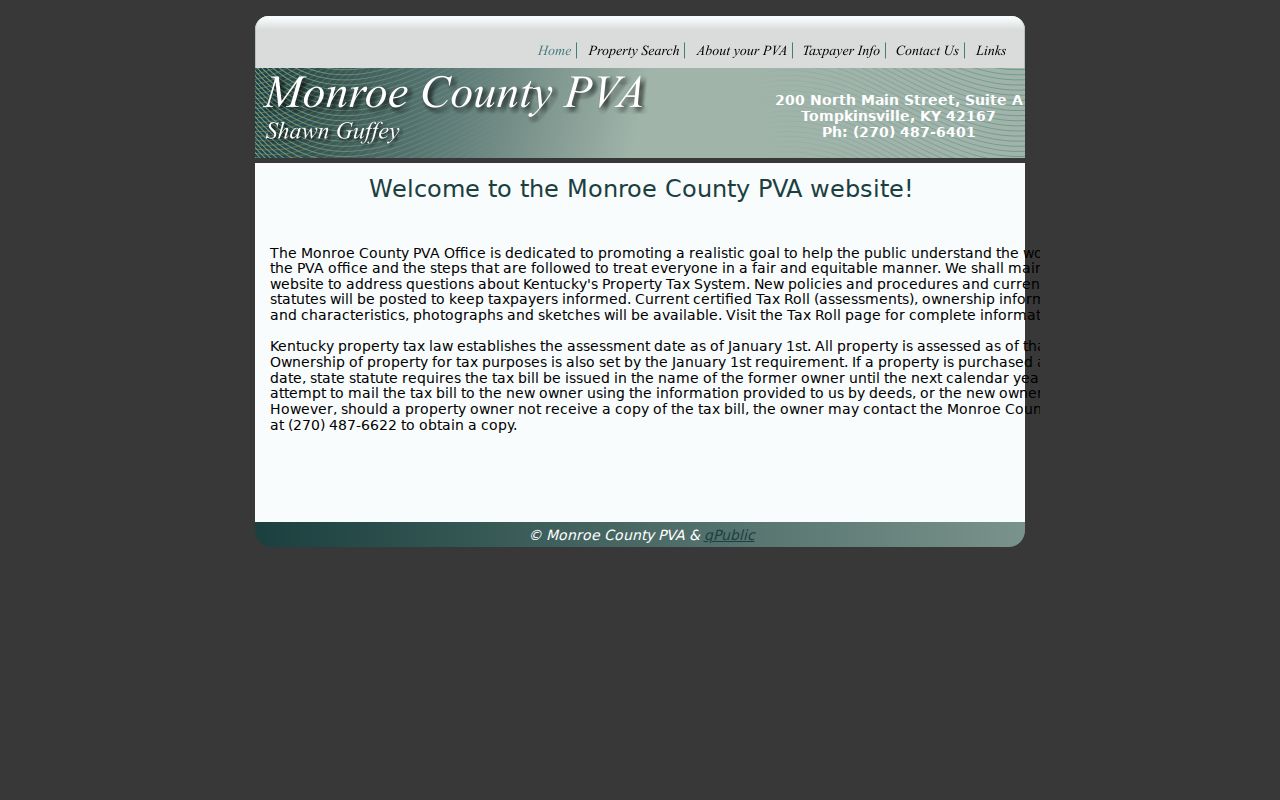
That warning belongs to the record itself. It is why a parcel card works as a strong lead but never the last word on title or sale terms.
Monroe County Deed Search Has a Five-Search Ceiling
Residential eCCLIX gives Monroe County residents free access for personal, noncommercial research. The clerk caps it at five searches per day. Anything commercial requires a subscription instead. Since the daily allowance runs out fast, plan each Monroe County property search carefully. Gather party-name spellings, a date range, and parcel details. Add any known book/page reference before you begin.
Insider tip. Ask the clerk for the earliest online index and image volume before treating a blank eCCLIX result as proof that no older deed exists.
The residential eCCLIX signup screen is the clerk's official handoff for this access path.
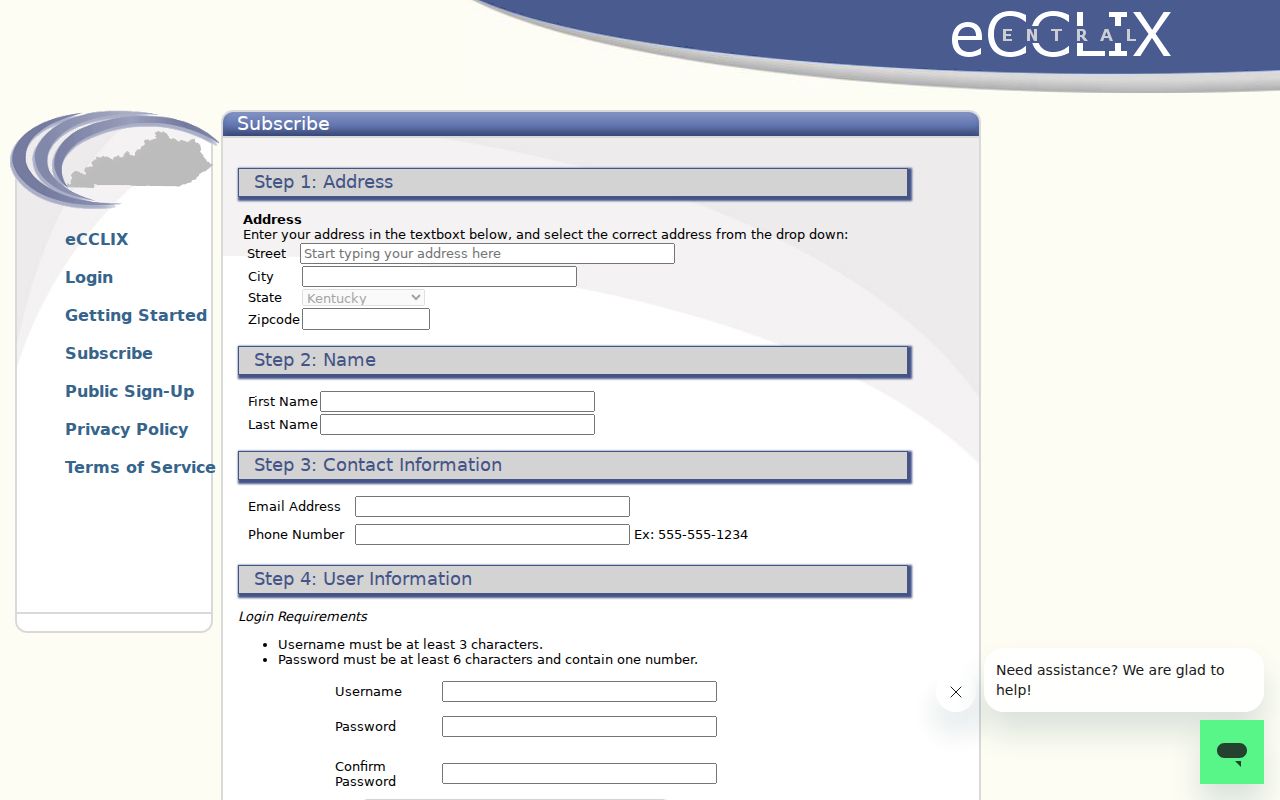
The online screen is only the entry gate. When an index or image falls outside online coverage, the courthouse counter and the Kentucky archives still matter.
January 1 Can Split Monroe County Owner Names
Kentucky sets assessment ownership on January 1. That single date controls whose name sits on the Monroe County tax roll for the year. A deed filed later in the year does not move it. The seller's name can stay on the tax bill until the next calendar cycle, even after the sale closes.
The Monroe County PVA can read the recorded deed and try to route the bill to the buyer's address. That courtesy helps with mailing. It does not change the assessment date, so the owner of record on the tax roll remains the January 1 holder until the year turns.
Label the source
Recorded grantee: the buyer named in the newest deed. PVA owner: the name shown on the assessment roll. Tax-bill name tracks the person or entity tied to that bill year, and parcel ID is a database locator, not a legal description.
Line up three dates. Placing the deed recording date beside the assessment year and bill year resolves one of the most common apparent conflicts in Monroe County property records.
Older Monroe County Property Records Need a Second Door
Older records take a second door. Monroe County publishes no earliest year for its online eCCLIX deeds. Deeds, plats, wills, tax material, or court orders from earlier eras may sit in the clerk's books, on microfilm, or with the Kentucky Department for Libraries and Archives. The William B. Harlan Memorial Library adds local-history and genealogy material. That context can surface a former name or a date range.
The KDLA research-room guide explains appointments, microfilm, original records, and request routes.
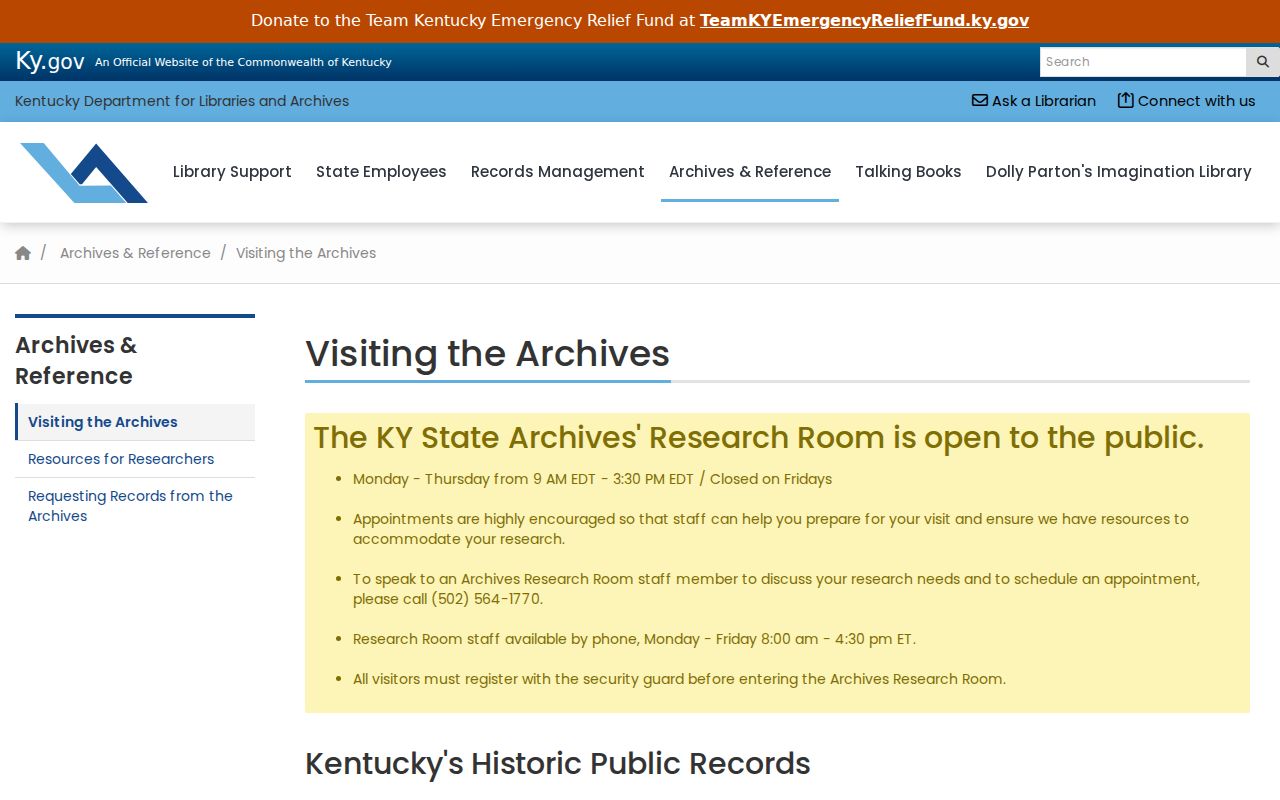
Then return to a deed locator. Archive and library clues can bridge an index gap, but historical context alone never establishes title.
DOC ALERT Watches Monroe County Recordings by Name
The County Clerk offers free DOC ALERT notices. When a mortgage or deed is filed under a watched name, the notice goes out. The watched name can be personal or business. It is a notification tool only. It is not a block on recording. It is not proof that a filing is valid. Name variants matter, especially for entities or changed names.
Enrollment starts at the official Monroe DOC ALERT page. Keep the confirmation. Contact the clerk if an alert flags an instrument you do not recognize.
Note: Recheck covered instrument types and active terms on the clerk's page before relying on the service.
Tax Certificates Are Not Automatic Title Transfers
The sheriff collects regular real-property bills. After the close of business on April 15, unpaid bills transfer to the clerk, and certificates of delinquency are created on or about April 16 as recorded liens. A third party may buy a certificate. That purchase is not a tax deed, and it does not prove the prior owner lost title.
The clerk's live delinquent-tax page lists a sale on September 23, 2026, at 1:00 p.m. Central Time. The notice is time-sensitive. Verify the current page before acting. Then check payment, purchase, redemption, enforcement, and any later deed or release.
Limits of Monroe County Property Records
Public files have limits. They show a recorded owner, instrument, assessment, lien, or parcel description as of a stated date. They cannot prove occupancy. Clear title, boundaries, and appraisals sit outside the files. Mailing addresses may differ from situs addresses, and Kentucky Safe at Home can substitute an official address for an eligible participant.
Lawful use. Use Monroe County property records for land research, due diligence, boundary questions, estate work, and civic review. Never use owner data to stalk, harass, or harm anyone.
Records sometimes disagree. When they do, note the office, the system, the record date, your retrieval date, and a locator for every fact, then report the mismatch rather than picking whichever name or value looks convenient. Timing explains many conflicts, since a deed may post after the assessment date and shift the owner of record mid-cycle. An estate or an entity may explain an odd label. A parcel split may change the identifier while an older deed still names the parent tract. The primary document beats any blended summary.
Open-record access has limits too. Requests should name a specific pre-existing document. That detail is what lets staff find it. Kentucky agencies generally answer a proper written request within five working days, excluding weekends and legal holidays, though a delayed response may state the cause and earliest availability. Copy charges track reproduction cost. The clerk requires payment in advance. Confidential tax-return information stays closed even when a related assessment record is open.
For a final note, quote the locator. Extra personal data rarely helps a land question. A parcel number, book/page, or instrument number is enough. Those keys let another reader return to the same official source, while broad republication of mailing details adds risk without improving the property analysis. Keep the citation tight and the rest of the record where it belongs. Kentucky Safe at Home makes that restraint matter more, since an eligible participant may use a substitute address in public files.
Open Records Requests for Monroe County Property Files
Kentucky's Open Records Act, KRS 61.870 through KRS 61.884, gives a written route when a public property file sits beyond the normal web or counter search. The Monroe County Clerk accepts its own form or a plain written request by hand delivery, mail, email, or fax. Include the requester's name, phone, address, residency statement, and a precise description of the existing record. Locators do the heavy lifting. Precision beats volume. A parcel number, party name, instrument type, date range, book/page, certificate number, or plat reference gives staff a real target, while a vague request for everything about a property rarely gets far.
Timing is set by statute: an agency generally responds within five working days, excluding weekends and legal holidays. If production takes longer, the response should explain why and give the earliest availability. A denial must identify its exemption. It should also explain how the exemption applies. Copy charges generally reflect actual reproduction cost, plus the medium or postage where relevant. Monroe's clerk requires fees in advance. Commercial-purpose rules can differ. These provisions open existing records only, and no office must create a new database analysis, boundary opinion, ownership report, or title abstract.
Send each request to the actual custodian. The clerk handles recorded instruments and delinquent certificates. The PVA handles assessment, parcel, correction, and map-product questions. The Circuit Court Clerk supplies the underlying court files identified through CourtNet or Judicial Indexes. A city office may hold an ordinance or permit file. It does not replace the county land-record offices. Routing matters especially in Tompkinsville, where the clerk and PVA occupy separate suites and the Justice Center maintains another record stream.
How Monroe County Court Files Join the Property Trail
A deed index can show that a dispute happened without saying what it was about. Foreclosure, quiet-title, partition, probate, judgment, tax-lien enforcement, and related cases begin at the Monroe County Justice Center. They also begin in Kentucky's state court indexes. CourtNet covers public case information statewide. Still, the Administrative Office of the Courts is not the custodian of the underlying local file. Capture the case number and the parties. Then ask the Monroe Circuit Court Clerk for the record itself.
Older material lives in the Kentucky Judicial Indexes. Choose a county and court, and search plaintiff and defendant. You can also run an all-indexed search with the names left blank. Handwritten source indexes produce variant spellings. The displayed civil date can be the latest date seen rather than the filing date. Accession notes may flag gaps or file locations. Preserve those limits alongside the result.
A court lead becomes property evidence only after reconciliation with the recorded instrument. Compare the parties, and the parcel or legal description. Weigh the judgment or order, and any commissioner's deed, release, lis pendens, or later conveyance. A docket entry alone proves little about whether a sale closed, title passed, or a lien remains in force. Pair the finding with the deed.
Keep the case locator and the deed locator together. That paired citation lets the next researcher pull both sources and see exactly where the legal proceeding ends and the recorded land consequence begins.
Monroe County Maps Are Identification Aids
Monroe County has no county-branded GIS viewer. The county documents no public tool for spotting adjacent parcels. qPublic is the first map source to test. It ties an address to a parcel sketch, photograph, legal-description lead, and nearby identifiers. Treat any missing layer as an access gap. Guesses do not belong in property records work.
Kentucky DOR Mapping Services is a second channel, reached through the local PVA. Its guidance prices a standard 24-by-27-inch PVA map at $25. Digital data runs $50 plus parcel or special-project charges. Confirm cost and availability before ordering. A request should name Monroe County and the fields. It should also cover the date or version, the output format, the geographic scope, and whether ownership fields are needed.
The state labels PVA mapping as identification-only, never a conveyance. When a fence, drive, easement, or boundary call matters, pull the recorded deed and plat. Then consult a licensed surveyor. A sharp map image gains no legal force from its visual precision.
Search Property Records
Sponsored Results
Visit the Monroe County Clerk
When an online property search runs dry, the Monroe County Clerk is the office to ask about Monroe County land records held offline.
Monroe County Clerk
200 N. Main St., Suite D
Tompkinsville, KY 42167
270-487-5471
Monday through Friday, 8 a.m. to 4 p.m.; Saturday, 8 a.m. to noon. Confirm by phone before you go.
Directions in Google Maps